Cuba
In Cuba, HI works in community resilience and disaster risk reduction, promoting the active participation of people with disabilities in society.
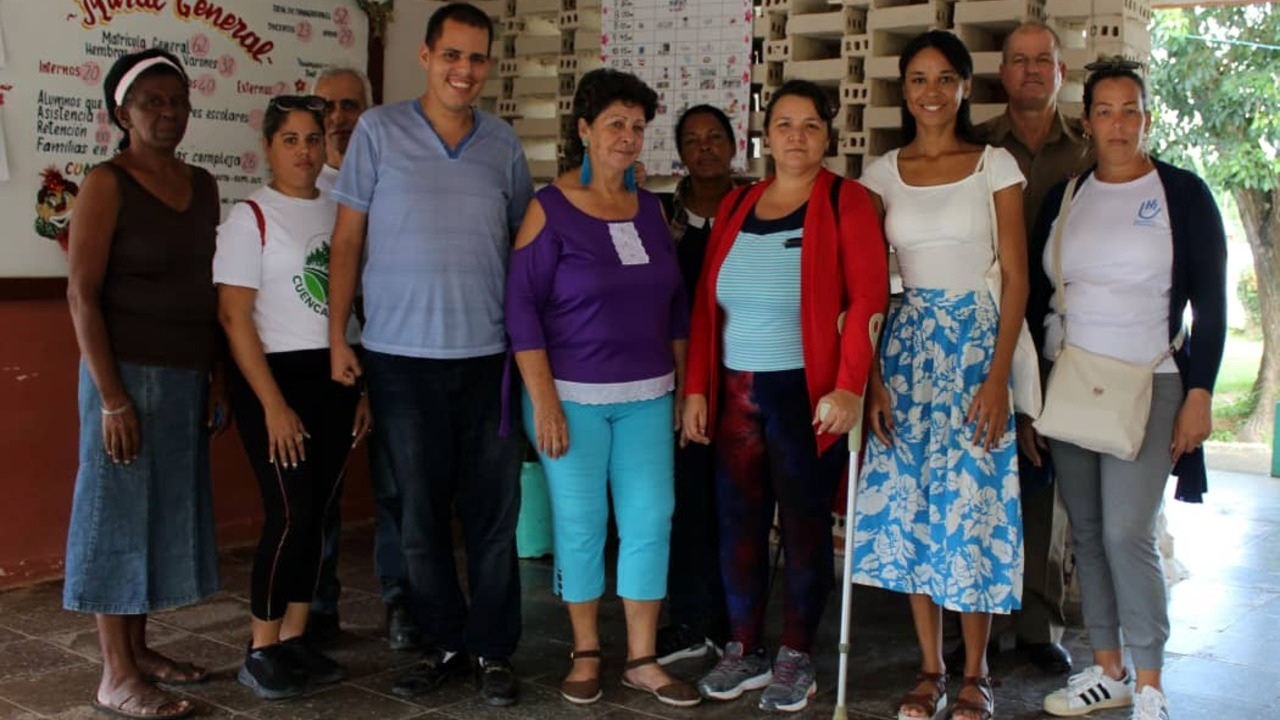
People supported as part of an inclusion project in Cuba. | © HI
Our actions
Cuba is highly prone to natural disasters, especially during the hurricane season, which runs from May to November each year. To help populations prepare, HI works with local authorities and civil society actors on disaster risk reduction and developing resilience strategies. The program supports local partners to develop their knowledge of risks and their preparedness and prevention capacities, ensuring that people with disabilities are taken into account in the responses provided.
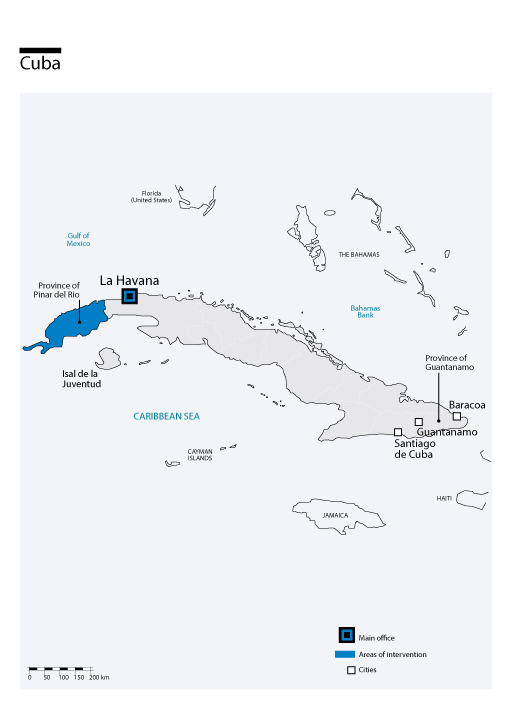
HI’s program is also implementing a project to support the population following Hurricane Ian, which hit the province hard in 2022. In three municipalities, it is supporting community initiatives that will enable residents to regain and sustain their livelihoods. The program is also supporting the development of community and family gardens to strengthen food autonomy. In addition, it is helping three schools to prepare for disaster risks and providing training and awareness for the teaching staff.
Lastly, still in the province of Pinar del Río, and in collaboration with numerous organisations of people with disabilities, Cuban civil society organizations and government ministries, HI is supporting people with disabilities, particularly young people and women, in order to promote their participation in decision-making bodies and ensure their voices are heard.
Areas of intervention


Latest stories

Tropical storm Melissa hits the Caribbean with full force
In Haiti and Cuba, where HI teams are based, the damage is considerable. There are fears that humanitarian needs will skyrocket.

In Cuba, HI promotes inclusive food sovereignty
In Pinar del Río, the development of inclusive, family-based urban agriculture is helping communities to become self-sufficient and resilient in the face of disasters, while strengthening social ties.

Ensuring equal rights for everyone in Latin America and the Caribbean
Based in seven countries in the region, HI has been growing its operations in the past few years to meet increasing humanitarian needs. We interviewed Nicola Momentè, HI’s regional director for Latin America and the Caribbean.
a life
Background
Cuba, the largest country in the Caribbean, is facing its worst economic crisis since the 1990s, and populations already experiencing extreme hardships are the hardest hit.
The Republic of Cuba, the largest country in the Caribbean, developed as a socialist country in the wake of the revolution in 1959. After the fall of the Soviet Union in the early 1990s, the country, whose economy had been strongly dependent on the USSR, entered a long period of economic difficulty that gradually resulted in a diversification of the national economy.
However, while many countries have recently revised their stance towards Cuba and promoted economic, cultural and political exchanges, the embargo imposed on the country by the United States continues to have a damaging effect not only on the island's ability to grow, but also on the lives of all Cubans. The Cuban economy has been hit hard by the tightening of the US embargo and the sanctions in place since 2018, as well as by the difficulties of its main ally in the region, Venezuela. Despite a limited human toll, the COVID-19 crisis has only worsened an already precarious situation by depriving the country of one of its main resources: tourism. As a result, Cuban GDP fell by 11% in 2020, before recovering to 0.4% in 2021 and 1.8% in 2022.
In recent years, the country has seen galloping inflation, increased difficulties for the population in obtaining essential items and, as a result, timid protests by civil society. Indeed, discontent among the population is growing. The country's fuel supply has also been considerably weakened, leading to periodic energy and transport crises. This situation has prompted many Cubans to emigrate to the United States or European countries.
Number of HI staff: 1
Program opened in: 1998