Lebanon
HI supports people with disabilities and at-risk groups, ensuring access to relief, protection, and recovery services. The association also conducts land release and responds to the successive crises that hit the country.
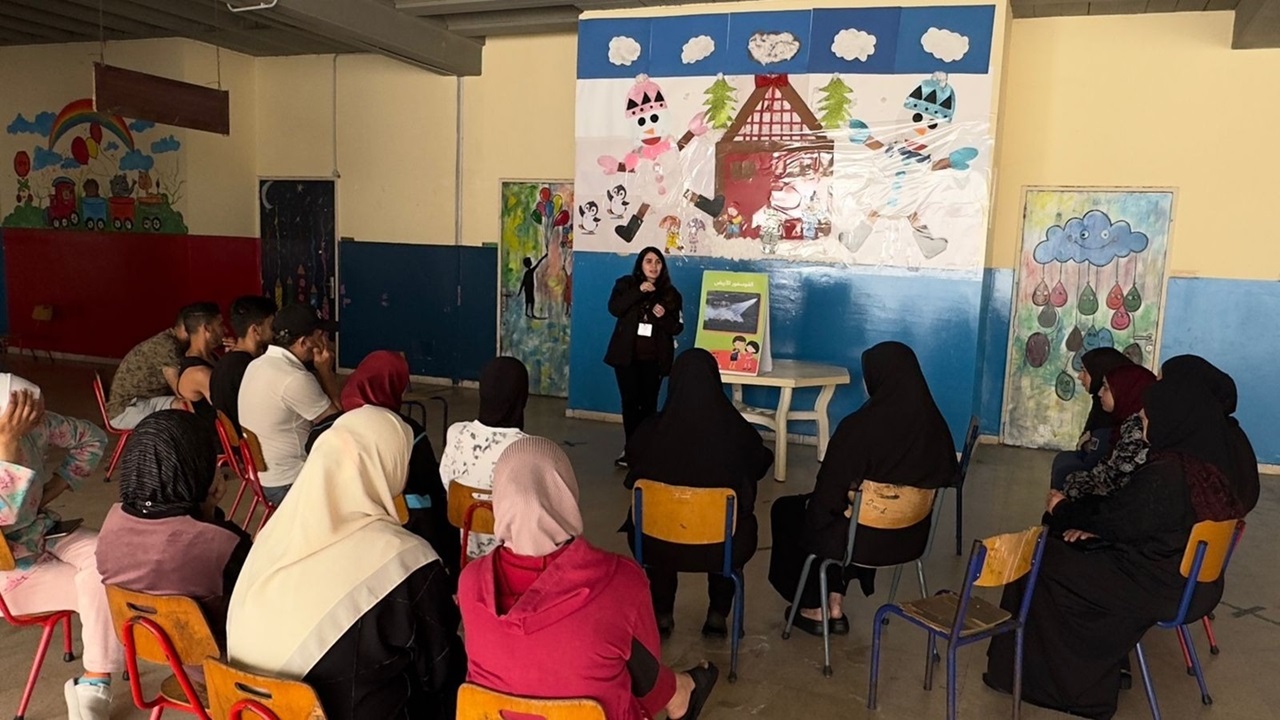
Risk Education session in a shelter of displaced persons in Beirut | © HI
Our actions
HI ensures that people with disabilities receive sexual and reproductive services, rehabilitation care, assistive devices, and mental health and psychosocial support. It also works to improve the inclusion of children with disabilities in mainstream schools and to enhance their access to mental health services.
HI is recognized as a key humanitarian mine action operator and has supported Lebanon since 2006 by reducing explosive ordnance contamination-related risks and restoring conducive conditions for economic and social development through land release. Current operations take place in Nabatieh, Bekaa and Mount Lebanon governorates.
HI promotes the inclusion of people with disabilities through coordination, advocacy, and support to actors and entities to ensure people with disabilities are not left behind.
Following the escalation of the conflict in Lebanon in 2023–2024, HI strengthened the health sector's preparedness in Southern Lebanon and contributed to enhanced conflict preparedness, protection, and awareness of risks related to explosive ordnance. In addition, HI launched an emergency response to address urgent basic and health needs, while providing logistics support to humanitarian actors to facilitate and accelerate their emergency response efforts.
Following the renewed escalation in March 2026, HI launched an emergency response aimed at reducing the immediate humanitarian impact of internal displacement on populations, including persons with disabilities, older people, and pregnant women affected by the ongoing conflict in Lebanon. This response ensures safe and dignified access to essential relief supplies, safe delivery services for pregnant women, rehabilitation services, and Explosive Ordnance Risk Education.
Areas of intervention


Latest stories

HI clears unexploded ordnance in the Bekaa Valley
The shelling of villages, which sometimes hits ammunition depots, causes heavy contamination and exposes residents to danger.

Lebanon joins the Ottawa Treaty: a strong signal for the protection of civilians
On May 1, 2026, Lebanon deposited its instrument of ratification of the Mine Ban Treaty with the United Nations, thereby becoming the 162nd State Party to this historic treaty.

Lebanon: People with disabilities, forgotten victims of the crisis
Thousands of Lebanese people have been forced to flee their homes. People with disabilities are the hardest hit and the least assisted, HI states in its new report: Leaving No One Behind.
a life
Background

Lebanon faces a severe, prolonged economic crisis, compounded by political instability and the lasting effects of the COVID-19 pandemic. A large majority of the population has fallen into poverty.
The country hosted around 1.5 million Syrian refugees who have fled over a decade of conflict in Syria, as well as a long-standing population of Palestinian refugees. These communities face significant barriers to accessing essential services such as healthcare, education, and employment. By early 2026, 500,000 Syrians had returned from Lebanon.
People with disabilities remain largely excluded from assistance and are often overlooked in humanitarian responses, increasing their risk exposure.
Lebanon is also affected by the legacy of past and recent conflicts. Contamination from mines and explosive remnants of war persists, particularly in southern regions and areas affected by more recent hostilities.
The hostilities in 2023-2024 that turned into a full conflict, with repeated bombing and shelling in November 2024, caused massive destruction and led to the displacement of around 1.2 million people across Lebanon. According to the Lebanese Ministry of Public Health (MoPH), the conflict has resulted in the death of more than 4,500 people and left 18,000 others injured.
The ceasefire, signed on 27 November 2024, has been marred by multiple violations resulting in additional fatalities and destruction.
Since March 2nd, 2026, Lebanon has been drawn into a significant escalation, marked by intense airstrikes and military activity across Lebanon, with a major focus on southern Lebanon, Bekaa, Beirut, and its southern suburbs. More than 1 million people have fled under fire, seeking safety in overcrowded shelters, schools, and relatives. Critical civilian infrastructure — including homes, health facilities, roads, and essential services- has been damaged or destroyed, further compounding humanitarian needs.
By the end of April, the conflict was still ongoing in the south of the country, despite the announcement of a ceasefire, causing the death and injury of more than 10,000 people.
- Number of HI staff: 52
- Program launch date: 1992
Reports
The latest publications
> How Lebanon’s Invisible Disability Data Gap Has a Human Cost in Crisis (pdf, 809.99 KB)> Explosive Weapons Monitor 2024 (pdf, 6.32 MB)
> Explosive Weapons Factsheet (pdf, 4.94 MB)
> Issue Brief: Devastating impact of conflict on persons with disabilities living in Lebanon (pdf, 495.89 KB)
More > News