Syria
In Syria, HI supports people affected by nearly 14 years of conflict.
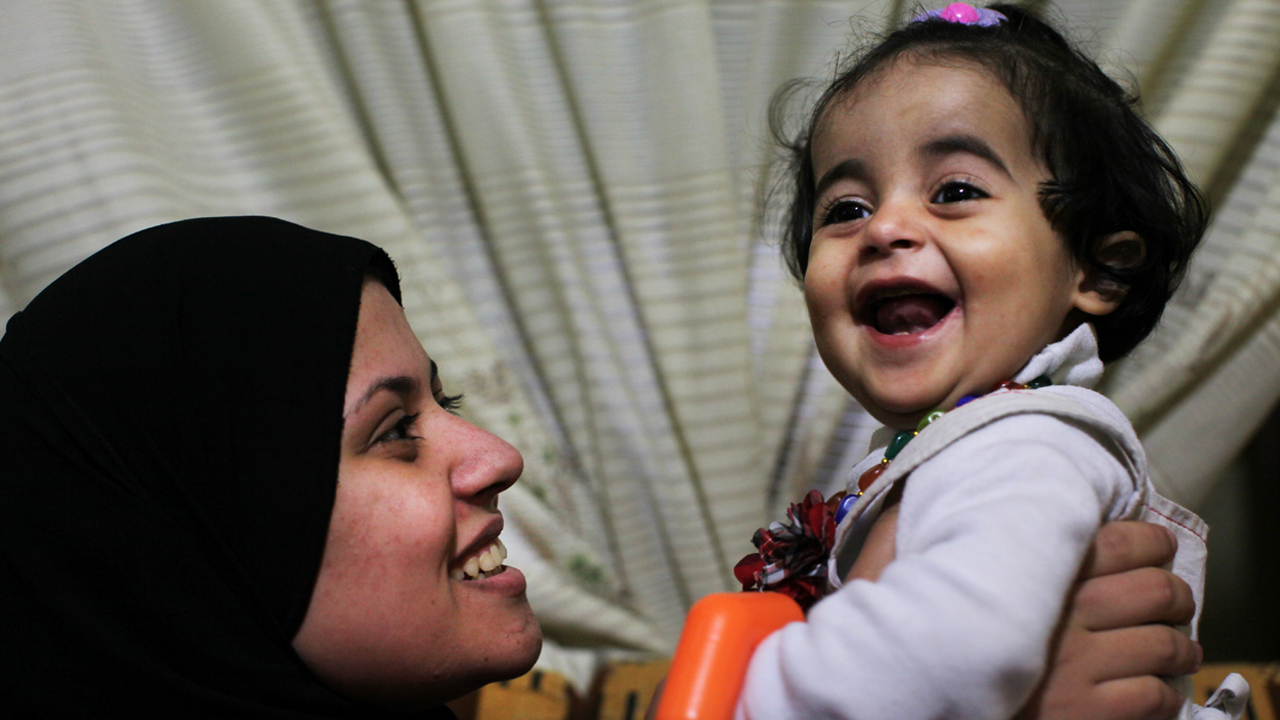
A Syrian woman, who was paralyzed after being shot when fleeing bombs, holds her daughter. | © Layla Aerts / Handicap International
Our actions
HI provides rehabilitation services to people injured during the conflict as well as to persons with disabilities. These services are delivered across several regions of Syria, including Aleppo, Homs, Rural Damascus, Raqqa and Deir ez-Zor. HI collaborates with a dozen local medical facilities to deliver these services, and prosthetics and orthotics.
HI teams conduct disposal operation to clear mainly school, hospital, and civilian infrastructure in general from explosive hazards in Raqqa, Deir-ez-Zorr, Hama, and Idlib. HI conducts contamination impact surveys to understand the extent and impact of explosive ordnance contamination.
HI also implements Explosive Ordnance Risk Education (EORE) to help communities avoid dangerous items.These sessions target populations most exposed to risk: Internally displaced people living in contaminated areas; refugees and returning families; farmers and shepherds; working-age men; humanitarian and social workers; children; and persons with disabilities.
HI continues to support individuals through rehabilitation services, inclusive education, disaster preparedness, and humanitarian mine action activities across the country. In Northeast Syria, HI works closely with local communities and partners to strengthen community resilience against natural hazards. Through community-based risk management activities, residents are trained to identify risks and prepare for potential natural disasters and emergencies.
HI supports inclusive education programs in the governorates of Raqqa and Deir-ez-Zor. These programs aim to ensure that children with disabilities can access education alongside their peers. HI also works with schools, teachers, and families to adapt learning environments, promote inclusive teaching methods, and remove barriers that prevent children with disabilities from attending school.
Areas of intervention


Latest stories

Without humanitarian aid, Abdul cannot undergo surgery
The case of Abdul Karim, who has been walking with crutches since he was shot, illustrates how cuts in humanitarian aid funding are affecting people with disabilities.

Being a mother of a child with disabilities in Syria
Raifa, talks about her son, Hadi, 8, and the difficulties she faces in accessing healthcare services for his disability in a post-conflict country.

Spend a week with a prosthetist in Syria
On the occasion of World Humanitarian Day, to honor aid workers, Prosthetist and Orthotist in Syria, Yeti, tells us about his work and daily life in the country:
a life
Background

The Syrian conflict (2011-2024) has caused one of the largest humanitarian crises in the world. Nearly 500,000 people have been killed and more than half of the country's pre-war population has been displaced. Today, around 15.6 million people in Syria require humanitarian assistance, while over 5.5 million remain internally displaced. In addition, more than 4.4 million Syrians are still living as refugees in neighboring countries, mainly in Turkey, Lebanon, and Jordan.
The political landscape shifted significantly in December 2024 following the change in government, raising hopes for greater stability and enabling the return of hundreds of thousands of displaced Syrians. However, the situation remains fragile, with continued localized violence, economic challenges, and widespread infrastructure destruction. Many returnees face damaged homes, limited public services, and contamination from landmines and explosive remnants of war.
Humanitarian needs remain immense. Access to essential services and healthcare — particularly for people with injuries, disabilities, or chronic diseases — remains extremely limited. Persistent insecurity, damaged infrastructure, economic hardship and restrictions on humanitarian access continue to hinder the delivery of assistance to millions of civilians across the country.
- Number of HI staff: 243
- Program opened in: 2012
Reports
The latest publications
> POLICY BRIEF - Bridging Policy and Practice 2026 Returning to Syria: Supporting Safe and Inclusive Returns from Jordan and Lebanon (pdf, 1.17 MB)> Funding Cuts Turn Inequalities into Permanent Exclusion - A Regional OPD from Sub-Saharan Africa. (pdf, 2.01 MB)
> Disability Inclusion in Syria: Bridging Promise and Practice (pdf, 2.53 MB)
> Syria Explosive Ordnance Contamination Report / December 2025-March 2026 (pdf, 6.25 MB)
More > News