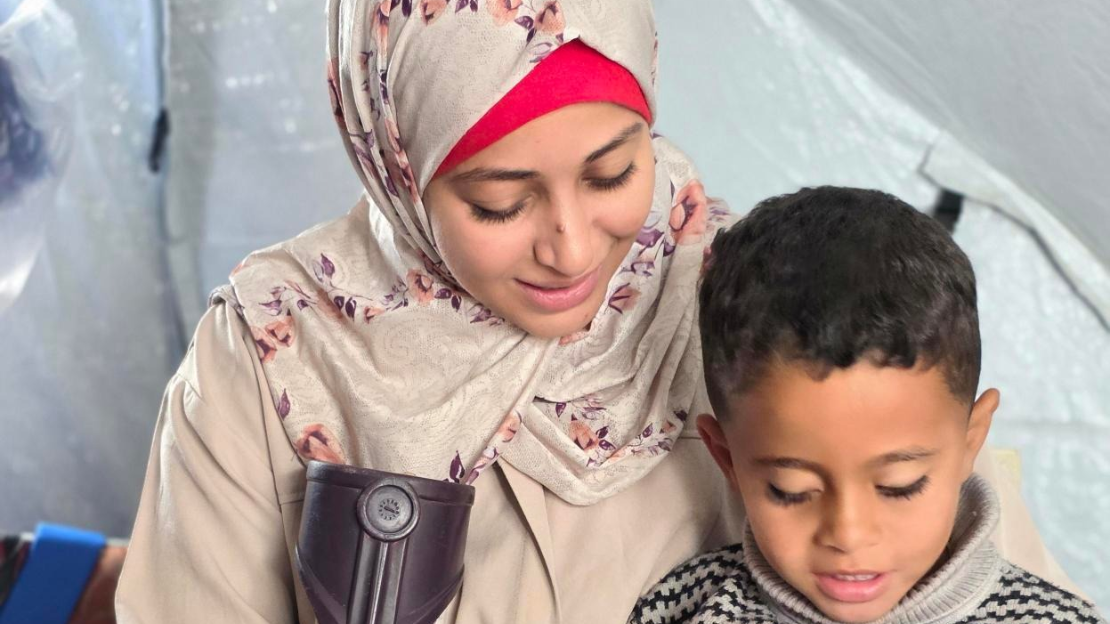
Fatima, a 40-year-old mother who was forcibly displaced six times in the Gaza Strip | © K. Nateel / HI Palestine


Fatima, a 40-year-old mother who was forcibly displaced six times in the Gaza Strip | © K. Nateel / HI Palestine
Rabab is a 30-year-old single mother of one child who has lived with a congenital disability since birth, caused by tendon shortening. Before the war in Gaza, she ran a small business selling stationery and foam handicrafts and was financially independent. Rabab also led awareness initiatives promoting the rights of people with disabilities.
Once a champion on the Palestinian national athletics and basketball teams, Rabab also nurtured a deep passion for drawing and handicrafts. She had always envisioned herself playing an active and independent role in society.
Since the war, however, daily life has become a struggle for survival. Despite being surrounded by people, she often feels lonely and isolated. Displaced 15 times, she endured repeated bombardment, fear, and extreme deprivation. At times, food was so scarce that she and others were forced to eat birds and animal feed.
“The world failed me, but I learned a lot and emerged from the tough war stronger than ever. The war took away the life I had built, but it did not take away my determination. As long as I am able to care for my son and keep hope alive, I know I have not been defeated,” said Rabab
Living in a tent as a single mother with a disability since birth, she faces constant hardship. Basic services such as electricity, clean water, and access to schools are absent. With almost nothing, she must cook, clean, and care for her son while managing the additional challenges posed by her disability.
The experience has also transformed her. Surviving the war and continuing to care for her child despite relentless adversity is, in itself, a powerful achievement.
Rabab concludes, saying, “We have endured things no one should experience, yet I continue to stand for my child and for myself. What keeps me going is the belief that our lives still have value and that our future should not end in a tent.”
Fatima is a 40-year-old mother who was forcibly displaced six times in the Gaza Strip. She received mental health and well-being support, as well as rehabilitation services, from HI’s team.
Fatima was wounded during the war and lost her foot to amputation. Before the conflict, she lived independently and managed her daily errands herself. Since then, however, she and her family have been displaced multiple times, each move more difficult than the last. Now confined to a tent, she says she often feels like a prisoner, unable to move freely.
As a woman living with a mobility disability, she says the challenges feel doubled. The war took away the independence she once relied on, leaving her dependent on others for nearly everything—primarily her son—after her husband was killed.
With roads and infrastructure largely destroyed, even basic movement has become extremely difficult, even when someone is available to assist her. Despite repeated forced displacements while ill and wounded, and the harsh conditions she continues to endure, she remains determined to regain her strength and rebuild the life she once had.
“There are days when the obstacles feel overwhelming, but I remind myself that surviving this far means I cannot stop now. I want to regain my confidence and build a future again,” said Fatima.